Research Mode for stable luminance
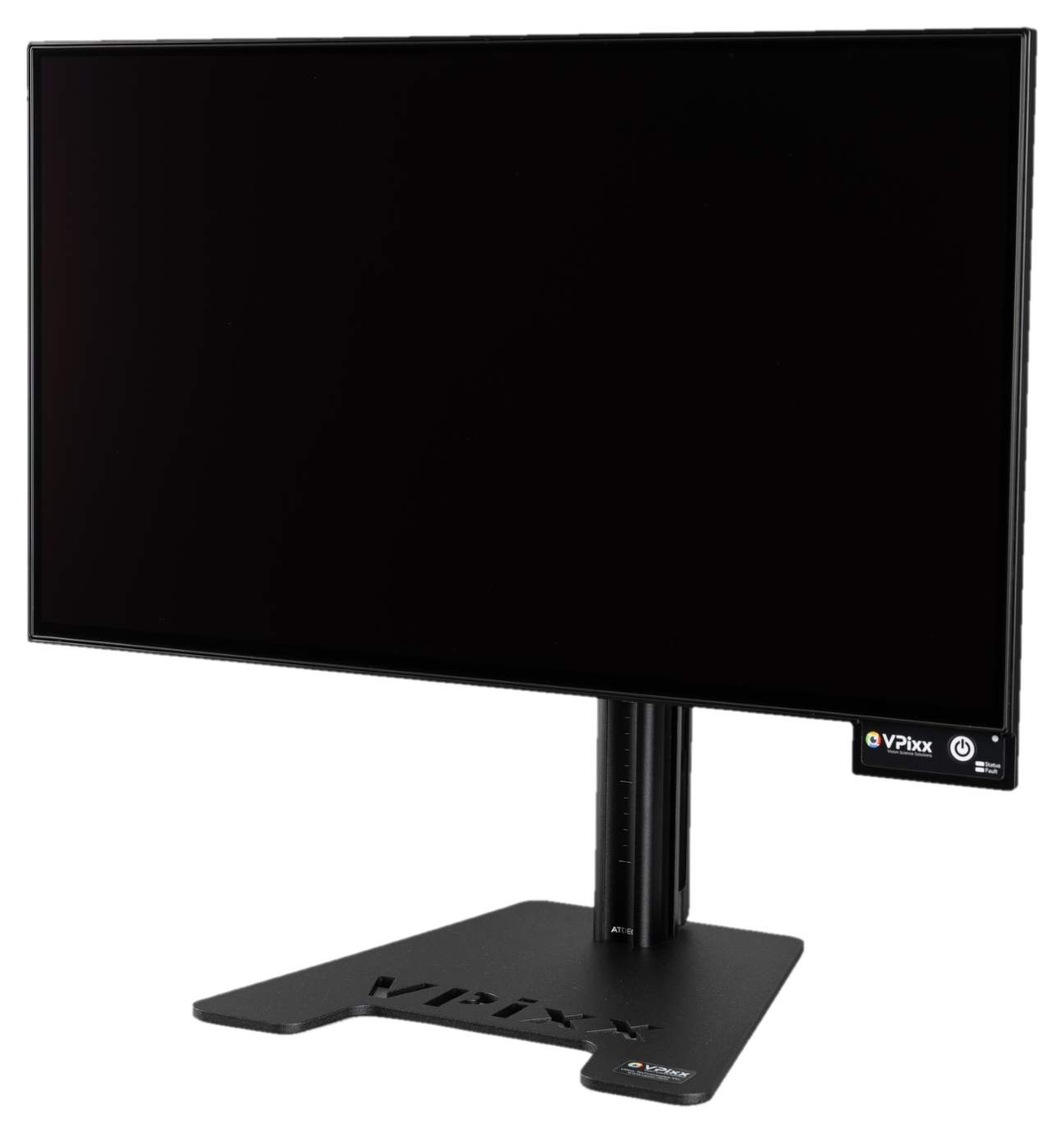
Research Mode turns off consumer OLED features such as variable brightness, variable refresh and variable gamma. Turn it on with the remote control or in software.
Standard 2.2 gamma and optional linear luminance modes
The VIEWPixx3 /OLED is programmed with a standard gamma of 2.2 for compatibility with traditional display output. We also offer a linear gamma mode for experiments requiring a linear relationship between the user-specified luminance level and display output. This mode can also be enabled with the touch of a button; no programming or customization is required.
Extensible solution for complete system integration and synchronization
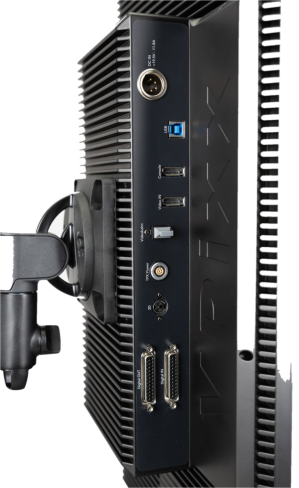
Beyond image quality, the VIEWPixx3 /OLED is part of an integrated research ecosystem. It has a VESA output for stereoscopic 3D experiments at 60 Hz per eye, with the XPANDvision model of the 3DPixx glasses (sold separately). Twenty-four channels of built-in digital TTL input enable you to record incoming signals with microsecond precision; add a RESPONSEPixx button box for precise measurement of participant responses. Twenty-four channels of digital output support precise triggering/synchronization with EEG and other lab equipment. Our Pixel Mode feature allows you to drive automated video-based TTL triggers with no programming required.
Flexible software control and console monitor output
Researchers can control the VIEWPixx3 /OLED using low-level MATLAB and Python APIs, or manage both experiment design and hardware configuration with our LabMaestro software suite. A dedicated console video output supports an optional secondary monitor (≥ 2560 × 1440 @ 120 Hz) that mirrors the main VIEWPixx3 /OLED display with no additional GPU overhead, providing a convenient operator console for experiment monitoring.
Advanced cooling technology for stable performance
Advanced VPixx cooling technology, engineered specifically for the VIEWPixx3 /OLED, maintains optimal uniformity and gamma stability over time and extends the lifespan of the display.